If there is one Korean skincare ingredient that has been absolutely everywhere lately, it is PDRN.
And naturally, that means we now have PDRN serums, creams, masks and ampoules promising everything from glass skin to “skin regeneration.”
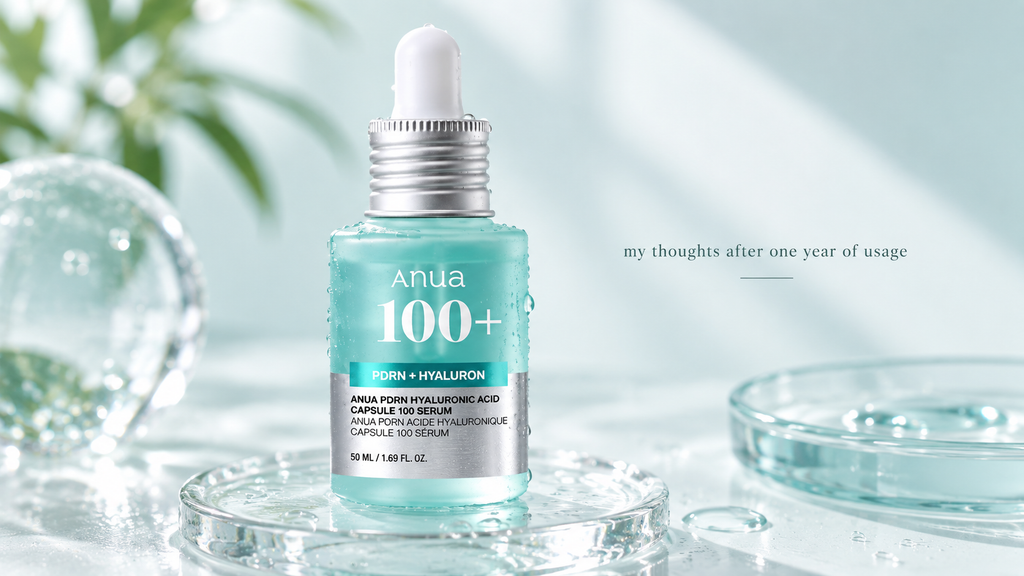
I’ve been using the Anua PDRN Hyaluronic Acid Capsule 100 Serum for around a year now, through both winter and summer.
And spoiler: I really like it.
Also for me, it’s real consistency because I have A TON of skincare) And despite the fact I can switch to many many serums this Anua PDRN Serum is my go-to serum. But probably not for the reason the PDRN hype might make you expect. I don’t look at this as an injectable PDRN treatment in a bottle. I don’t expect it to dramatically rebuild my skin or give me the same effect as an aesthetic procedure.
More details below!
My Skin Type: Why This Serum Had a Difficult Job
For context, my skin is quite demanding.
It is sensitive and very prone to irritation and breakouts, and occasionally my skin barrier becomes compromised.
At the same time, I get dry patches, so hydration is extremely important for me.
You might think the obvious answer would be very rich creams and thick barrier serums.
Unfortunately, my skin doesn’t particularly enjoy those either.
I don’t handle very thick, heavy or oily textures well. If a product sits on my skin, feels greasy or creates that heavy coated sensation, I usually don’t want to keep using it.
So what I want from a serum sounds simple but isn’t: a lot of hydration without a lot of weight.
And this is exactly where the Anua PDRN serum works extremely well for me.
My Anua PDRN Serum Review After One Year
The first thing I noticed – and still probably my favorite thing about it — is the texture.
It is beautiful.
The serum has enough body that it actually feels hydrating rather than disappearing like tinted water, but it doesn’t feel heavy or sticky (unlike the pdrn spray from anua – I don’t like the feeling it gives).
When I put it on, I can genuinely feel that hydrated, plumped sensation I associate with a good hyaluronic-acid serum. My skin feels as though it has actually taken in moisture.
That matters enormously to me because I’ve tried other PDRN skincare products that were much less pleasant to use.
And skincare you theoretically love but don’t want to put on your face every day isn’t particularly useful.
This one I actually reach for.
The Hydration Is the Real Star
Although PDRN gets all the attention in the product name, I think hydration is actually one of the strongest reasons to buy this serum.
Look at the ingredient list and you’ll see several humectants high in the formula, including glycerin, butylene glycol and propanediol.
Then Anua adds multiple forms of hyaluronic acid, including:
- hydrolyzed hyaluronic acid;
- sodium hyaluronate;
- hyaluronic acid;
- hydrolyzed sodium hyaluronate;
- hydroxypropyltrimonium hyaluronate;
- potassium hyaluronate;
- sodium hyaluronate crosspolymer;
- sodium acetylated hyaluronate.
So when my skin feels noticeably more hydrated after applying it, I’m not relying on PDRN to explain everything.
There is a very substantial hydration system in the formula itself.
And Anua’s own product testing reports a temporary 24.64% improvement in deep skin hydration after one use and an 8.93% improvement in temporary hydration/moisture-plumping effect. Those are manufacturer testing results rather than independent clinical evidence, so I wouldn’t treat the exact percentages as universal outcomes.
But directionally, they line up with my experience.
This serum hydrates my skin very well.
What Is Actually Inside the Anua PDRN Serum?
The full product is more interesting than simply “PDRN + hyaluronic acid.”
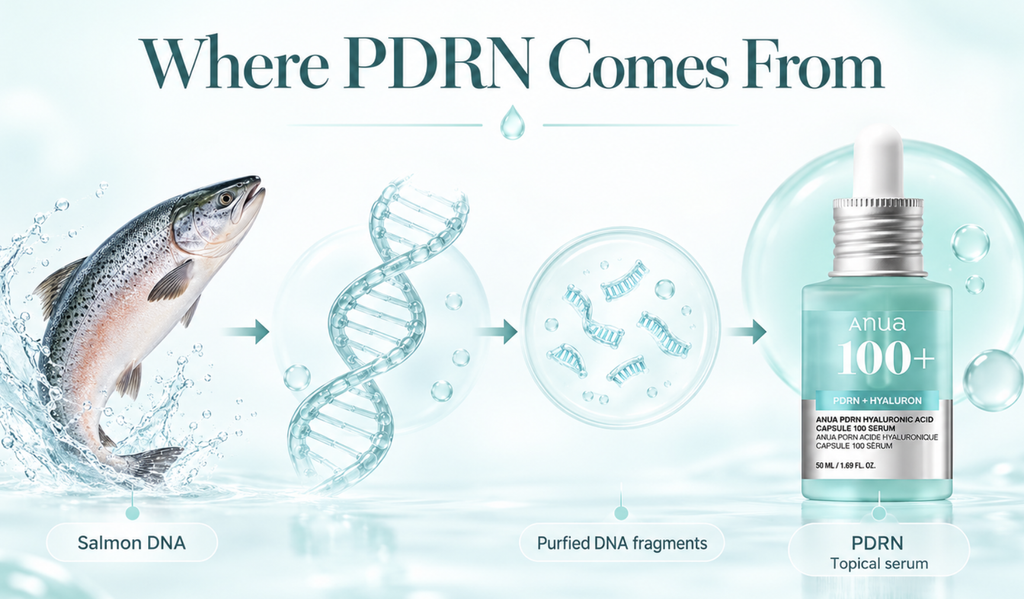
The current formula includes Sodium DNA, which Anua identifies as PDRN derived from salmon DNA. It also includes niacinamide, glutathione, hydrolyzed collagen and adenosine alongside the various forms of hyaluronic acid.
That gives the formula several different roles.
Niacinamide is a familiar skincare ingredient used in products targeting barrier support and uneven tone.
Hyaluronic-acid derivatives and humectants provide the hydration.
Adenosine is commonly used in Korean anti-aging formulas.
And then there is the fashionable part:
PDRN.
About the “Capsule 100” Technology
Another thing I like about the Anua PDRN Hyaluronic Acid Capsule 100 Serum is that it isn’t presented as simply dumping an ingredient into a watery base.
Anua describes the product as using Smart Capsule 100 Delivery, a microcapsule system designed to support hydration delivery while maintaining the serum’s lightweight, fast-absorbing feel.
And I do appreciate the formulation approach.
And from a purely practical perspective, whatever Anua has done with the formulation has resulted in one of the nicest PDRN-serum textures I’ve personally used.
That’s what ultimately matters to me.
Is Anua PDRN Serum Good for Sensitive Skin?
For my sensitive skin, yes.
And that is actually one of the biggest reasons I keep repurchasing it.
My skin can become irritated fairly easily, I’m prone to breakouts, and I occasionally have periods where my barrier isn’t in its best condition.
The Anua serum has worked very comfortably for me during those periods.
It also doesn’t contain added parfum/fragrance in the current ingredient list, which I personally appreciate in a serum aimed at hydration and sensitive skin.
Anua also describes the product as having undergone low-irritation and non-comedogenic testing.
That doesn’t mean it is guaranteed to work for every sensitive or acne-prone person.
Nothing in skincare works that way.
My experience is only one person’s skin.
But if you have sensitive + dehydrated skin and find many rich “repair” products too heavy, I think this is a particularly interesting formula.
What About Dry Skin?
This is where I’d recommend it even more confidently based on my own experience.
My skin gets dry patches, especially when the weather changes or my barrier isn’t happy.
I’ve used the Anua PDRN serum through both winter and summer for approximately a year, and that versatility is one of its biggest strengths.
In winter, it gives me an extra hydration layer underneath moisturizer.
In summer, the texture is light enough that I don’t feel as though I’m stacking three blankets over my face.
That’s exactly what I want from a year-round serum.
If you’re extremely dry, I wouldn’t expect the serum to replace a moisturizer.
It’s a hydrating layer, not an occlusive cream.
But underneath the right moisturizer, it works beautifully for me.
Is It Sticky?
This is something I always want to know before buying a hyaluronic-acid serum.
Because some of them are awful.
You put them on, touch your cheek five minutes later and somehow your face has become flypaper.
I don’t have that issue with this one.
The Anua PDRN serum feels hydrating without remaining noticeably sticky or oily on my skin.
That’s probably one of the biggest differences between this and some other PDRN products I’ve tried.
It feels like something I can actually layer.
Serum → moisturizer → sunscreen works without everything becoming unbearably heavy.
And because I enjoy applying it, I use it consistently.
But Let’s Talk About PDRN Marketing
This is the part where I think expectations need to come back down to earth.
Topical PDRN serum is not the same thing as injected PDRN.
A lot of the excitement around PDRN comes from aesthetic medicine, where polynucleotide/PDRN products are delivered into tissue using injections.
Systematic reviews of aesthetic PDRN and polynucleotide treatments have reported promising results for concerns such as skin texture, elasticity, wrinkles and wound healing, but much of that evidence relates to procedural/injectable use, and researchers still describe the overall evidence base as developing.
Topical PDRN is a separate question.
There is now emerging research investigating whether specifically formulated topical PDRN preparations can penetrate relevant layers of skin and influence markers associated with skin repair. A 2026 study, for example, investigated a particular medium-length topical PDRN preparation and reported penetration and clinical effects — interesting evidence, but that does not automatically prove that every PDRN cosmetic serum produces the same effect.
So I wouldn’t buy the Anua serum because you expect:
“PDRN injections, but without the injections.”
That’s not what it is.
I see it as daily skincare.
And judged as daily skincare, I think it’s excellent.
So What Does the PDRN Actually Do?
This is where I would be careful about separating what we know from what skincare marketing implies.
PDRN stands for polydeoxyribonucleotide and consists of DNA-derived fragments. There is scientific interest in PDRN because of its potential biological activity in areas including tissue repair and dermatology.
But topical efficacy depends on much more than whether “PDRN” appears on an ingredient list.
Molecular properties, concentration, formulation, delivery and skin penetration all matter.
And we don’t currently have evidence showing that putting any random PDRN serum on your face reproduces the effects seen from medical injections.
That doesn’t make topical PDRN useless.
It just means I wouldn’t make PDRN alone the reason to purchase this particular product.
For me, the reason to buy the Anua serum is the whole formula:
PDRN + multiple forms of hyaluronic acid + humectants + niacinamide + other supportive ingredients + a genuinely elegant texture.
That is a much less exciting claim than “salmon DNA regenerates your face.”
But I think it’s a much more useful one.
Does Anua PDRN Serum Cause Breakouts?
It hasn’t caused problems for me, despite my skin being very prone to irritation and breakouts. That’s important because skincare can sometimes become a problem for my skin. The PDRN Anua serum hasn’t.
But obviously, people can react to almost any cosmetic formula.
How I Use Anua PDRN Hyaluronic Acid Capsule 100 Serum
Anua says the serum can be used morning and night before moisturizer.
I use it in the morning routine. After cleansing, I apply the serum as my main hydration step and then follow it with moisturizer, and when it’s really hot, I skip moisturizer and apply sunscreen on top of it.
Because it’s a hyaluronic-acid-heavy formula, I particularly like applying it on damp skin.
Who Do I Think Will Like It?
I think the Anua PDRN Hyaluronic Acid Capsule 100 Serum makes the most sense if your skin sounds something like mine:
- sensitive;
- easily irritated;
- prone to dehydration;
- dry in certain areas;
- occasionally dealing with a compromised barrier;
- oily skin that doesn’t like heavy textures;
- skin that is uncomfortable with very rich or greasy products.
For me, Anua has done this part much better than several other PDRN formulas I’ve tried.
On the other hand, if your only reason for buying it is because you’re expecting dramatic injectable-style “skin regeneration,” I’d adjust those expectations before spending the money.
Pros and Cons of the Anua PDRN Serum
What I love
The hydration is excellent.
The texture is probably my favorite part: lightweight but still substantial enough to actually feel nourishing.
It isn’t greasy.
It isn’t unpleasantly sticky.
It layers extremely well.
My sensitive and breakout-prone skin tolerates it.
I can use it in winter and summer.
And after around a year of use, it has become one of my dependable go-to serums.
What I would keep realistic
The PDRN marketing can make the product sound much more dramatic than a topical serum realistically is.
This isn’t injectable PDRN.
I wouldn’t buy it expecting a medical aesthetic treatment from a bottle.
And although my skin tolerates it very well, that doesn’t guarantee every sensitive skin type will react exactly the same way.
My Final Anua PDRN Serum Review
Would I recommend the Anua PDRN Hyaluronic Acid Capsule 100 Serum?
Yes. Easily.
But I recommend it primarily as a very good hydrating and skin-supporting serum, not because I believe topical PDRN is going to magically regenerate your face.
I’ve used it for around a year in both winter and summer.
My skin is sensitive, prone to irritation and breakouts, occasionally has a compromised barrier, and still manages to be dry enough to demand serious hydration.
This serum fits into that awkward combination almost perfectly.
It hydrates.
It makes my skin feel plumper and more comfortable.
It doesn’t feel greasy or heavy.
It doesn’t leave me with that unpleasant sticky hyaluronic-acid-serum finish.
And compared with other PDRN skincare products I’ve tried, I simply enjoy this one much more.
The capsule technology and PDRN are interesting bonuses.
But the reason it remains in my routine is much simpler:
my skin genuinely likes it.
Don’t expect an injectable treatment in a bottle.
Expect a sophisticated, lightweight hydrating serum that is extremely pleasant to use.
And especially if your skin is dry, dehydrated or sensitive but hates thick skincare, that might actually be the better reason to buy it.
Where to buy Anua PDRN Serum? I get it on YesStyle – it costs around 20 € there.
Also available on Amazon – for 27$ as of now.
FAQ
Is Anua PDRN serum good?
In my experience, yes. I’ve used it for around a year and it has become one of my go-to hydrating serums. I particularly like its lightweight, non-greasy texture and the fact that it provides noticeable hydration without feeling heavy.
What does Anua PDRN serum do?
The Anua PDRN Hyaluronic Acid Capsule 100 Serum is primarily positioned around hydration and a plumper, more luminous appearance. Its formula combines salmon-DNA-derived Sodium DNA/PDRN with several types of hyaluronic acid, hydrolyzed collagen, niacinamide, glutathione and adenosine.
Is Anua PDRN serum good for sensitive skin?
My own sensitive, irritation-prone skin tolerates it extremely well. Anua also lists the serum as low-irritation tested and non-comedogenic tested. Individual reactions can still vary.
Is Anua PDRN serum good for dry skin?
This is actually one of the skin types for which I think it makes the most sense. It contains multiple humectants and several forms of hyaluronic acid, and I find it very effective on my own dry patches without being heavy.
Does Anua PDRN serum contain salmon DNA?
Yes. Anua states that the Sodium DNA/PDRN used in the serum is derived from salmon DNA.
Is topical PDRN the same as PDRN injections?
No. Injectable PDRN/polynucleotide procedures deliver material directly into tissue, whereas a serum has to work as a topical formulation through the skin barrier. Evidence for injectable applications is more established, while research into topical PDRN is newer and formulation-specific.
Can I use Anua PDRN serum every day?
Anua directs users to apply it morning and night before moisturizer. I’ve personally used it as a regular year-round serum.
Is Anua PDRN serum sticky?
On my skin, no. It has a hydrating, slightly substantial serum feel when first applied, but it settles very comfortably without the heavy sticky finish I dislike in many serums.